
A story told by myself, John Ingham about the area that I was born into, and grew up in. The first in the series of audio recordings.
Author: flutterby
-
Performance
I’m coming to the end of my growing up years at Keyham and at 10 years of age the dreaded 11+ is rapidly approaching. Much depends on the outcome, you’re almost mentally drawn into the bright future at Grammar School or the rejection by failure and spending several years at the Secondary Modern with the “rough” kids. It may not have been intentional but that’s the scenario played at you regularly by Parents,Teachers, priests and nuns in their wish for you to succeed. Around this time Maureen, who by now had moved to London to work had met and about to marry Joe Holland and broad Scotsman from Renfrew. He had as a child been a good footballer but contracted a TB hip in his teens and spent a number of years in hospital ending up with a fused hipbone which would give him a permanent limp.
Whilst both had been brought up as Catholics the wedding was going to be at Holy Redeemer and I was going to serve the Mass.In truth I suspect they had both given up on religion but it kept both sets of parents happy and a good party afterwards. In any event it all went off very well and the reception at Victory Hall was well attended. I recall that in the build up to to wedding our only form of entertainment was the radio and a new sound filled the airwaves. Guy Mitchell was an American crooner who had a huge hit with “look at that Girl”. It was played so often I used to sing along until I could sing it word perfect. At the wedding a pianist was engaged to play background stuff with the occasional dance but for a ten years old it seemed boring. I asked to sing the song but the pianist didn’t know it or was too bothered about modern stuff. So I said I’d sing without the pianist. Someone found a mic and I was away. It went real well with a great big cheer and an en core later on. Something I have never forgotten first claim to fame in public.
But the dreaded exam could not be put off and eventually it happened. Some weeks later and we were told the outcome was imminent and that if you got a thick envelope you’d passed if you got a thin one you had failed. They certainly knew how to up the hype although we were quite the innocents in all this.Anyway a thick envelope I got and duly went home to ring Dad had taken the day off to await my homecoming,so important did they view this occasion. I couldn’t help but feel sorry for those with the thin envelope and the stigma of failure it implied,and I wondered then if there wasn’t a smell of snobbishness around the whole scenario,and how we would all be affected by this dreadful experience. -
Dockyardies
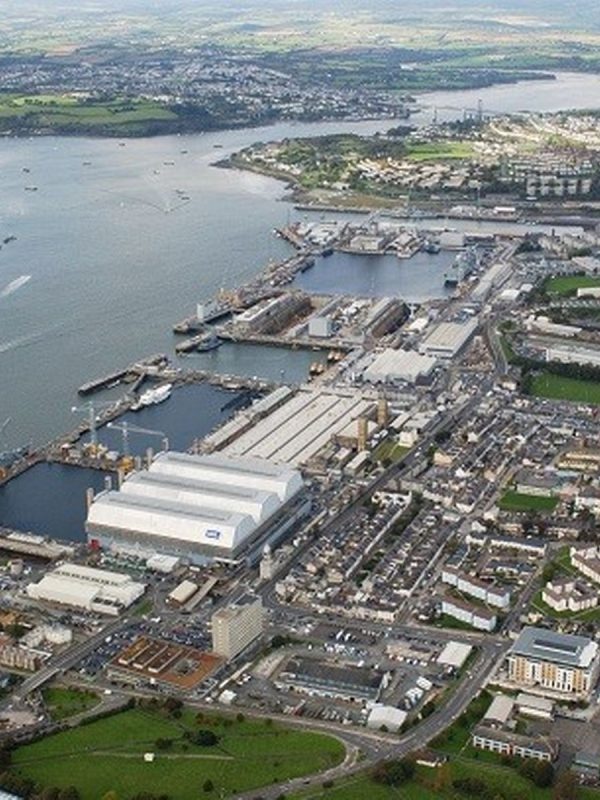
I suppose you could say that growing up in Keyham was pleasant and in many ways. In a community with spirit because of the strength of both religion and politics. There was also a strong spirit amongst “Dockyardies”, (those who worked there) and that could sometimes be shown as almost unique dark humour only known inside the walls of the place. As a nine year old life had settled into a regular sort of routine. Religion through the week with Mass and Communion the core reaching a contented sort of spirit on a Sunday as if the week had been worthwhile. School with the looming 11+ coming ever closer and detailed schooling, Sister Austin teaching Penmanship as it was known then, but really it was just clear writing classes. She would have three lines across the pages or the blackboard and you had to keep your letters up to the first level, top level for “t l b d” etc with the round bits exactly to the first level. You were in serious trouble if it was scruffy. I also recall some classmates were left-handed and this was not encouraged, in fact it was deemed wrong and there were some confrontations with some parents over the ferocity the Sisters dispensed if they thought you were defying them. I have often wondered if those classmates had problems in later life over that, although I hope not.
So many people I have mentioned here were good friends of both Mum and Dad and that created a mixture of religious,political and neighbours who brought a range of opinions and views to life in Keyham and in many ways they all came together as a community if any changes or issues affecting the community came there was usually a united front. It was for me the first time I had seen or experienced that and in some ways was reassuring to a boy of nine that this could happen.
I can recall one annual event that was always something to look forward to. I think it was around Autumn time when nights were pulling in. Aunty Vera lived in Wombwell Cresc with Grandma Riggs and Uncle Ernie who worked in Dockyard and stayed at Wombwell for some of the time. The military started conducting annual mock attacks on the Naval barracks and base. The Royal Marines were tasked get into both by whatever means and claim a victory while the Royal Navy was tasked with stopping this happening. Sailors and Marines were armed although only firing blanks. At the back of Wombwell beyond the allotments was the firefighting site with parts were regularly set ablaze so the practice of firefighting aboard could be accurately enacted. Right next to and almost under “Shaky bridge “carrying the main Penzance to London Trainline it was an entry point for a marine attack through the creek at Camel’s Head. Bursts of gunfire indicated action and huge movement of bodies suddenly appearing from the base this would go on during the day but more intensely at night.
I can always recall Uncle Ernie moaning when delayed leaving work and late home that it was because “Bloody military playing bloody cowboys and Indians again”. For a nine year old it was quite exciting and always wanted to be at Grandma’s as long as possible. Apparently the Marines did some clever manoeuvres in lorries going into the Dockyard and under lorries so much that in these exercises all vehicles were stopped and searched throughly. I think the Marines did get in a few times to claim victory. -
Atlee
Correcting as I go I typed the wrong name of one of Harry Wright’s walking/photography group it should have been Fred Stott. He was another strong Methodist laypreacher who was the Personel Manager at the Dockyard and served as a Ward Councillor for the Efford Ward up to the early eighties.
As deputy Leader of the Labour Group, his passion was the Museum service and served on the Local Government National Museum Committee for many years. He was a very forceful orator and it was always a morolistic approach. It was where I heard about the inequality of access to opportunity for our people first being voiced by someone with whom it was very difficult to debate with from the purity of the line about fairness for everyone.
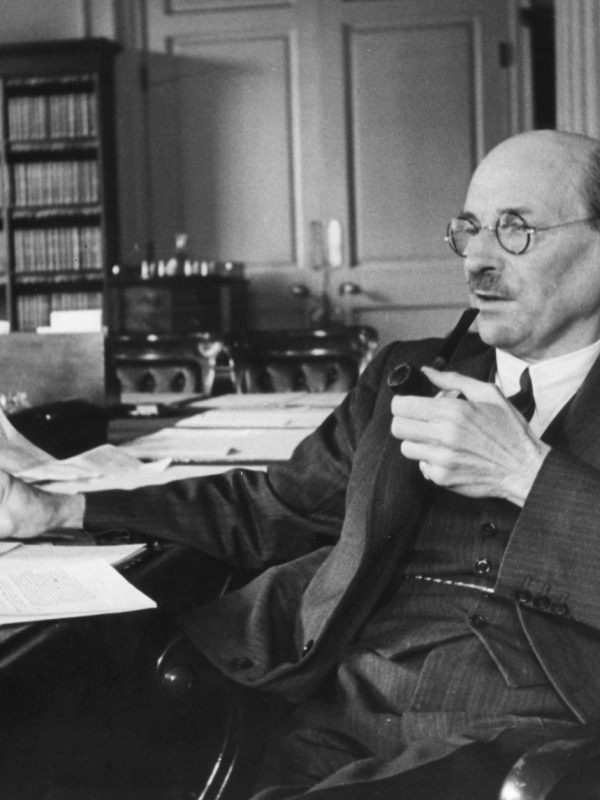
More about Fred and the others who formed the Labour Council in 1945 and their experiences in rebuilding the City with the Atlee government later. A number of the group played role beyond local government, demanding though that was, in the development of the NHS,and the nationalised electricity and gas services where the structures and control management that was needed was similar to local government, particularly in the accountability areas. -
More Personalities
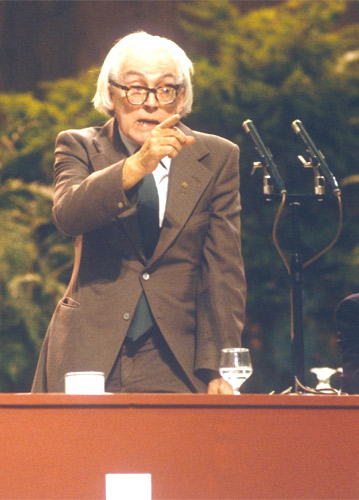
There was a garage at the back of the corner House opposite Victory Hall which had a large space and here Harry maintained a black van always serviced and ready for use especially in elections. It features in many of Michael Foots photos from his elections. Always driven and looked after by Ted Rippon who lived in Fleet St he and his wife were members of the Party and he looked after all the batteries and equipment like speakers,they were always in tip top condition.
Of course in later life when I first started work the Victory Hall was a Monday night Rock and Roll venue with live bands,that floor certainly was sprung well when everyone was dancing.They were packed evenings although I don’t think I ever mastered the dancing very well.
I do recall as an infant maybe seven or eight that I dropped Maureen in the deepest trouble. She was babysitting with I think my cousin’s Tricia and Mary and I was upstairs supposed to be asleep.They went to get fish and chips, I decided I’d visit mum and dad who were at a dance at Victory Hall,in my nightclothes.I think it was summer the night was light but upon arrival at the dance you can imagine the reaction,and the subsequent consequences on Maureen,Mary and Tricia.It always stuck in my mind that it wasn’t a really bright thing to do,but seemed like a good idea at the time.
A whole series of families connected to the Labour Party lived in Victory St,the Batershills ,the Steers,the Mitchell’s and Sid became a councillor later on and on top of that a good number of dockyard workers who were very active trade unionists although not individual members,they would know Harry Wright and the front bench of the party on council as they wer mostly dockyardies as well.One in particular from Victory St was Percy Roskilly he was the big mind of the Party and very close to Harry Wright.More about him and his role later on in the way the Labour Group conducted themselves after the War during their period of delivering the regeneration plan for the City.
-
Personalities Continued..
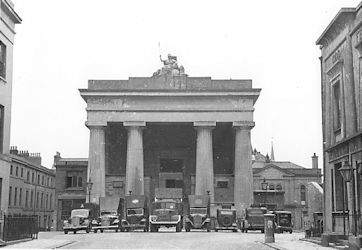
Sitting at the back of Victory Hall waiting for my parents did let me see a variety of characters. Doc Miles from Ernesettle was one, an early practitioner in the new NHS. He had an enormous number of patients and almost all poor. He would always come late and sit near me having been on call. He would find bits of paper from his pockets and would meticulously roll them into perfect balls and seek to log them down a series of knotholes in the dancefloor with deep concentration. But he was obviously following the meeting he’d suddenly shoot up and express a most passionate argument and then sit down returning to knothole filling.
Harry Wright was a simple boilermaker in the Dockyard but like all his Methodist colleagues he was a brilliant figures man. He could talk through a Council budget in a clear way committee by committee without notes and make it interesting and bear in mind in those days computers weren’t heard of so it was pure knowledge that made him so good.
He also set up the Devonport Supply Society which ran a drapery and clothing shop under the Hall in the ope.Many people paid in so much each week and could buy clothes,shoes and most importantly coal in the winter.If enough people joined Harry could buy a couple of lorryloads and have them delivered to individual homes at quite a saving for someone buying on their own.He had an office above the corner shop which was owned by the society and at one time was a Lipton’s store quite large.
Tim Harvey was a local Councillor and was a chemist in Station Rd and a huge advocate and supporter of the new NHS along with Scotsman Peter Ross another Councillor living in North Down Gardens next door to the Coop shop.Also in the actual park was a terrace of houses which house Betty Batchelor and her Mum Mrs Reeby and next door Mary Jago a Catholic both would become Councillors for Ford along with Dorothy Briscoa who lived in Warleigh AVE next to the tunnel to the Ford Hotel.
On the Conservative side there was a lady called Mrs Grafton who stood for the Tories time after time and in bad years came close to winning and I can’t recall if she ever did win an election but she was well known and was quite a fighter.
Harry Wright was quite a rambler in the countryside along with Best Harris the City Librarian they along with Fred Story would bring slideshows of their walks around the city to show communities some of the places perhaps noone had heard of before.In the top of the canteen wall they put a ledge and a hole for the projector to show the slides.Bearing in mind no one had cars at this time unless you were wealthy it was always well attended and hopefully many made a visit to some of the spots when they were able get a car.These were very popular meetings as many as 100+would attend.