Author: flutterby

  • Our Neighbours

    Our Neighbours

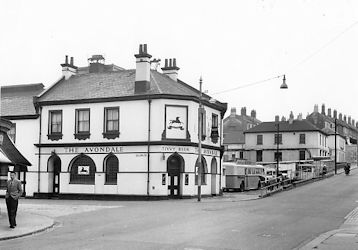
    Mrs Tremain lived at Number 51. She was a good friend of Mum and Dad as she was a member of the Labour Party so they met up quite often. She ran the Ironmongers and hardware shop on the corner of Fleet St opposite the barbers shop. The shop was owned, I think by George Walters who ran a building firm out the back of the premises. I remember a Wilf and Jack who were tradesmen working for him and a couple of others who played football for Oak Villa at North Down Recreation Ground on a Saturday afternoon. My Dad would take me up there and we would stand under one of the trees on the bank if it rained. 

    At 53 lived a retired couple Mr and Mrs Gloyn. They were lovely people and mum was always in conversations with them over the back wall when hanging out or taking in the washing. I remember playing with a prized christmas present, namely a water pistol. I was practising in the back garden, when Mr Gloyn declared it was definitely raining. He then decided to bring all the washing in, much to Mrs Gloyns concern. There wasn’t a cloud in the sky. When Mum realised what had happened it was my first experience of my mum’s anger. She was something to behold when angry. Needless to say it would the first of many of these  experiences for the remainder of my life.

    At  57 lived George and Elsie Rowe, of later Barbican fame as a  signwriter. George had just left the Navy and was establishing himself and his business. This was shortly after he moved to Dumfries Ave in Crownhill. They had a son, Michael who was a little younger than me. It was George who later in life declared that it was me who taught Michael swearwords. I  genuinely don’t remember consciously doing that, but I think I knew a few swearwords by then, so it’s just possible.

    At  59 lived the MacAvoy’s. Mr Mac was in the Navy and retired as Lt  Commander so he did very well. They turned out to be another Catholic family we would mix with at Church. Their son, Tony was a few years older than me but we spent a lot of time camping in the back lane. We used old sheets held off the walls with old bricks, until the coalmen’lorry delivering ran over  the edge of the bricks. It shot them like bullets through the tent and hitting the wall with such force, it narrowly missed us both. We moved to Alexandra Park at the top of  the street for us to pitch tents against the railings. They had an older daughter called Sheila. She became a very well known publican and charity fundraiser at the Royal Oak at Hooe. They also had a younger sister called Kathleen I think. Tony and I grew up in a very happy period but as he went off to St Boniface’s our times together died out.

    At 61 lived a lady  called Mrs Paull. She was a widow I think and was a very prominent member of St Thomas’s Church. Father Wood was then and for a long time afterwards the very active vicar.

    These were our immediate neighbours. Some linked beyond just neighbours by virtue of Church or Labour Party but all were highly regarded in the community. My recollection of these times were happy, hard and poor but making our own fun.

  • Our House

    Our House

    From what I can recall growing up at 55 Admiralty St, they were happy days. We had radio but no T.V which was unheard of then, the summers seemed long and hot and the community was friendly but not all in and out of each others homes. The house we lived in was a large roomed three up and back kitchen with an adjoining dining room downstairs, a back room and a front room. We had an outside loo and a 6ft aluminium bath for Saturday’s bath. I think I  was first in, followed by Maureen and then Mother and Dad. The hot water was provided by a huge copper tank with gas jets underneath from the main gas supply. This was for baths and the weekly wash on a Monday.

    The front room was rarely used and special occasions only. It was for visiting priests, birthdays and Christmas. A coal grate, which was only lit on those special days early in the morning, provided warmth but invariably the sash windows and the coldness of the house lost any heat very quickly. The visiting priests must have thought it strange that everywhere they visited was always cold. However they were regular visitors at these times with a big parish to cover and a very large number of  parishioners.

    Carpet was unheard-of and unaffordable so it was lino everywhere. Stuffed underneath was a mass of newspapers collected from the family. The outside loo used to freeze up in a bad winter. All in all they were happy days but you had to make the best of the circumstances.

    Maureen being 10 years my senior moved in a different circle and time frame to me. It really wasn’t till she came back to Plymouth after many years away that I really got to know and appreciate her. She was an extremely  talented student at Plymouth High School and apart from her academic brilliance she was apparently something to behold wielding a hockey  stick. She was a brilliant student and matriculated in seven subjects. She would have been well sought after for any University but whether it was unaffordable or not, I wasn’t sure if she ever had a wish to go. She later worked for Plymouth Cooperative Society at Radnor Dairy doing the laboratory tests on the  milk from the farms.

    At  that time Plymouth Coop owned much of the local farmland and collected from a wide geographical area. Their milk production was massive so again whilst I’m in school Maureen was working. Not long after she came home I’m in bed ready for school the next day so we never saw much of each other. I think I was more of a pain to her to be honest, more of which  later.

    We were blessed  with the most lovely neighbours from the bottom corner. At No 49 I think  lived the Earson family, they were rarely home only evenings as they ran a number of smallholdings including the Earson’s greengrocers at Marlborough St. They were very busy people. Their end wall was a fabulous spot for us to draw a permanent set of cricket wickets for Summer use and a goalpost set for Autumn and Winter. I remember Mr Earson particularly as he taught me how to remember the name sequence of the Keyham streets.

    The Admiralty Fleet will win Victory Renown on the Ocean, and 70 years later it’s still as fresh in my mind as it was back then, when he put much emphasis on each of the street names.


  • Admiralty Street

    Admiralty Street

    I was born on the 19th March 1943 at the Alexandra Nursing Home at Devon port so I can legitimately claim to be a Devon port boy. As we were a Catholic family  and the 19th March is St Joseph’s Day the name of Joseph was going to be in the name somewhere.So I was named John,Joseph Ingham named after my paternal grandad and St Joseph himself life for “JJ” at the latter stages of WW2 looked promising.

    My sister Maureen 10 years my senior has always maintained that I was a War accident that was never meant to happen and I think she’s probably right. Speaking to my cousin in York recently, who is also called John Ingham, he reckons that his family thought the same of him as we were born four months apart.Neither of us knew our paternal grandfather Frank John Ingham who along with his brother Alf had had a distinguished Naval career. Uniquely they had served together at postings almost the whole of their Naval careers Alf reaching Warrant Officer and Grandad retiring only to go back in at Lt Commander to oversee the mining of the south coast at the outbreak of war.It was doing this work that he caught pneumonia and died from it.

    He had before retiring bought 25 Vanguard Villas and it was here after his death that Mum and Dad and Maureen lived with Grandma in the upstairs flat.Now renamed as Saltash Rd Vanguard Villas disappeared many years ago.My earliest and most conscious memory is of us living at 55 Admiralty At,Keyham a large house which Dad rented so my claim to fame is not just a Devon port boy but a Keyham one to boot. I don’t think that Vanguard Villas had been a happy time for Mum in later life and in Maureen’s conversations they both indicated that Grandma was not an easy person to live with consistently. So many years later on grandma’s death Mum was very reluctant to go there to live,there were clearly memories for her before my arrival,of some unhappiness.

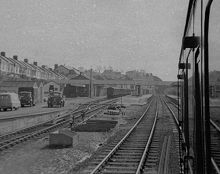
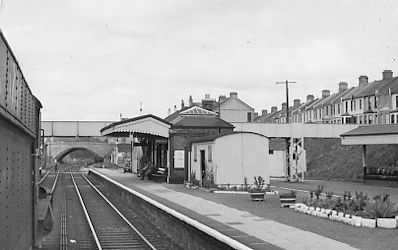
    Keyham was a remarkable place to grow up in, largely two up two down with outside loo it had taken a toll of bombing during the war, being so close to H.M.S.Drake and the Dockyard the near misses of bombing fell here so pockets of gaps appeared. At the top of Admiralty St there was a gap of about six houses on each side which as a result of a huge land mine going off in Royal Navy AVE devastated the area and it would be long after I left Keyham that homes were built. It did however provide us as children with a playground of wasteland next to the main railway line which was very handy for bonfire night.

    More exciting for us was the bombed out school at the rear of the houses in Total Navy AVE on the opposite side of the railway line.We had hours of fun playing “Three Musketeers” and Cowboys and Indians although the venue didn’t really match the prairies on the film’s we were beginning to see.I seem to remember Roy Rogers and others figuring in westerns.But with substantial basements and loads of classroom walls we could easily play most of a day quite happily in the spring and summer.